Science
Nucleus of Comet Neujmin Imaged at a 0.33-Degree Solar Phase Angle Reflects Light More Strongly Than Asteroids (NAOJ)
Key points (reviewing AI explanation)
NAOJ and others announced the fortuitous discovery of Comet Neujmin in archived Subaru Telescope images. Observed in a configuration receiving sunlight almost directly from the front (0.33-degree phase angle), the comet reflected light more strongly than an asteroid would.
Explanation
On August 25, 2026, a research team including the National Astronomical Observatory of Japan (NAOJ) announced that Comet Neujmin (28P/Neujmin) had been fortuitously captured in publicly archived images from a large-scale survey conducted with the Subaru Telescope's ultra-wide-field prime-focus camera, HSC. The images were taken on "March 7, 2016," at a position "more than 10 astronomical units" from the Sun.
At the time, Comet Neujmin had not yet developed a coma (a cloud of gas and dust), so the nucleus of the comet itself was captured directly. Moreover, it was observed in a configuration where the "angle formed by the Sun, comet, and Earth was 0.33°," meaning the comet received sunlight from almost directly in front.
In this configuration of reflecting sunlight from the front, the comet nucleus reflected more light and appeared brighter than an asteroid would. The research team views this as evidence that the particle size and the degree of gaps between particles making up the surface differ between comet nuclei and asteroids. Comets are considered bodies that still retain material from "about 4.6 billion years ago, at the birth of the solar system," and the findings were published in the Publications of the Astronomical Society of Japan (PASJ) dated August 25, 2026.
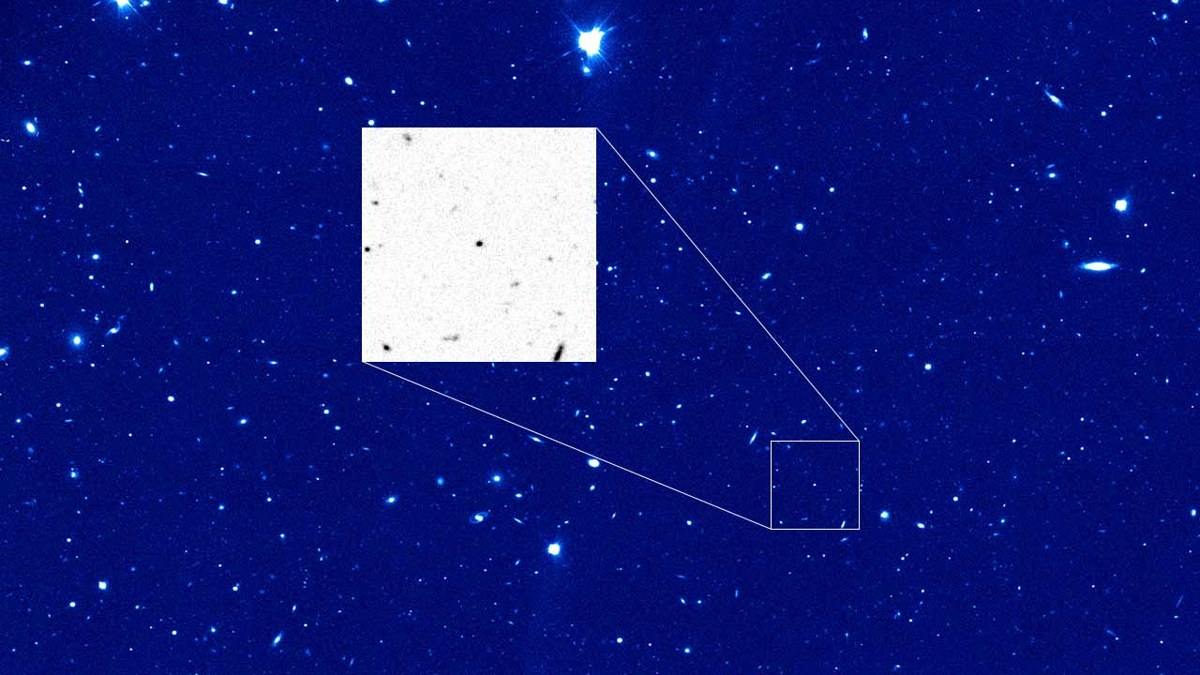
Figure source: www.nao.ac.jp(画像提供:国立天文台) ※ Reproduced as in the original (quotation)
Source: www.nao.ac.jp