Science
MMX, Which Will Collect and Return More Than 10g from Phobos, to Launch on H3 Rocket No. 10 on October 20 (JAXA)
Key points (reviewing AI explanation)
JAXA announced on August 20, 2026, that it will launch H3 Rocket No. 10, carrying the Martian moons explorer MMX, on October 20 at 4:41. MMX plans to bring back more than 10g of samples from Phobos.
Explanation
JAXA (Japan Aerospace Exploration Agency) announced on August 20, 2026, its launch plan for H3 Rocket No. 10 carrying the Martian moons explorer "MMX." The scheduled launch date is "October 20, 2026 (Tuesday) at 4:41:03" (Japan Standard Time), from Launch Pad 2 for large rockets at Tanegashima Space Center, with a backup window secured from "October 21, 2026 to November 7, 2026."
This rocket uses the "H3-24L" configuration, combining "two LE-9 engines" and "four solid rocket boosters (SRB-3)" in the first stage with a long fairing. MMX is planned to separate from the rocket's second stage into a Mars transfer orbit "approximately 1 hour, 11 minutes, and 12 seconds after launch."
MMX is a sample return mission from the Martian moon Phobos, aiming to achieve "humanity's first sample return from the Martian system in fiscal year 2031." The spacecraft consists of three modules — "outbound, exploration, and return" — with a mission duration of "5 years" and a launch mass of "4,480 kg." The plan is to "collect more than 10g of samples from Phobos and bring them back to Earth," with the spacecraft expected to "arrive near Mars approximately 1 year after launch."
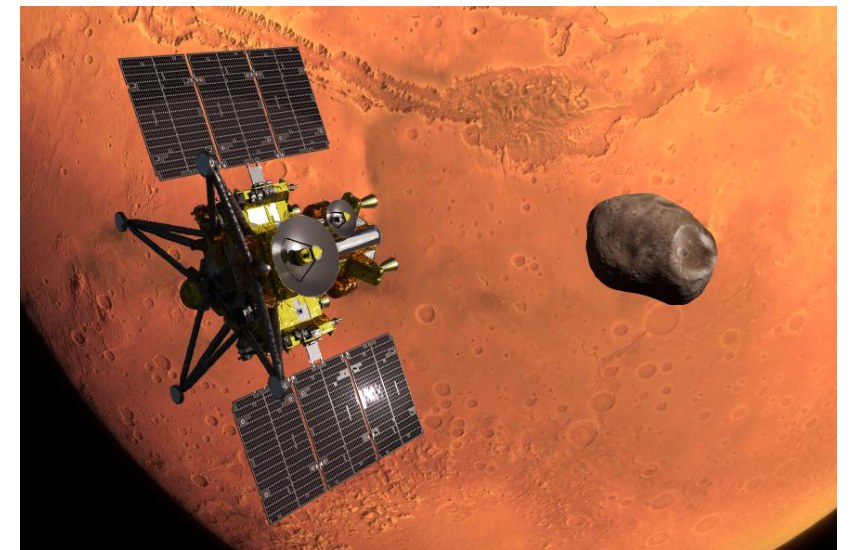
Figure source: www.jaxa.jp(提供:JAXA) ※ Reproduced as in the original (quotation)
Source: www.jaxa.jp